
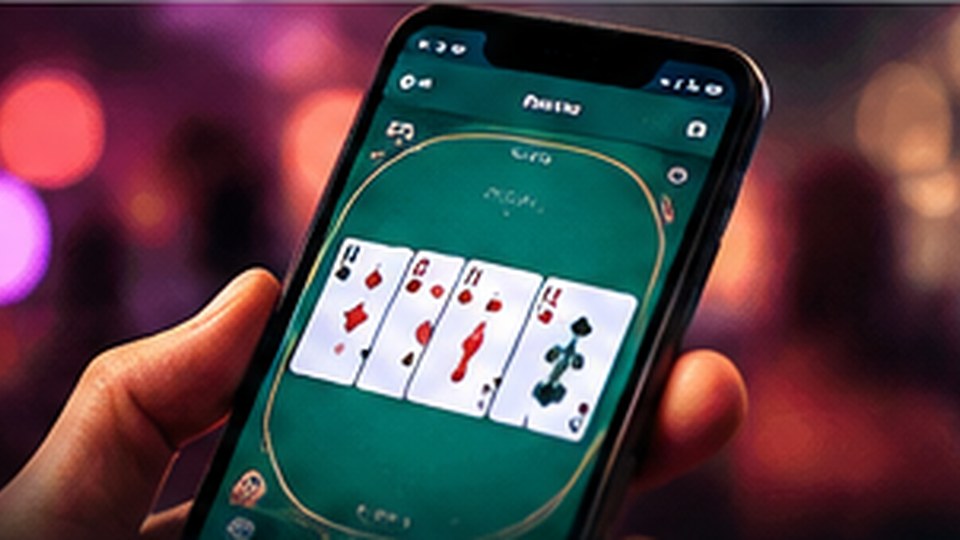
A deck of playing cards is portable, inexpensive, and remarkably adaptable. That helps explain why games using familiar poker combinations appear in different social settings, sometimes under names that are unfamiliar outside a particular country or community. Southeast Asia offers a useful lens on this process, although its card-game history cannot be reduced to a single regional tradition. The area contains many languages, legal systems, and leisure cultures, and documentary evidence varies considerably from place to place.
Shared symbols do not imply shared rules
The fifty-two-card deck creates a common visual vocabulary. Ranks and suits can be recognized across borders, and combinations such as a straight or flush are easy to explain. But a common vocabulary is not a common rulebook. Games may differ in how many cards are dealt, whether cards can be exchanged, how a winning combination is determined, and whether a round is played against another person or a fixed system.
For historians, this is the first distinction to preserve. A poker-style hand is evidence of a relationship to a broad family of card mechanics, not proof that two named games share a direct lineage. A regional name may refer to a local variation, a particular commercial implementation, or a category of experiences rather than one standardized design.
How games cross borders
Cards move through the same networks as other cultural objects: migration, trade, military contact, tourism, entertainment venues, and later mass media. A game can be learned informally, modified by a group, and passed on without leaving the kinds of records that historians prefer. This creates a challenge when reconstructing precise origins. The earliest surviving written mention of a game may be much later than the practice itself.
It also means that stories about a single inventor or founding location should be treated cautiously. Unless supported by contemporary sources, they are better understood as traditions or claims than settled history. Regional comparison becomes more useful when researchers ask narrower questions: Which rules were recorded? When did a particular name appear in print? What did early software interfaces actually show?
Five-card hands as a design language
Five-card combinations offer a balance between variety and legibility. A hand is small enough to show at a glance, yet it permits multiple recognizable patterns. This is one reason five-card structures have been reused in both social card games and electronic entertainment. The familiar hand rankings can make an unfamiliar interface feel approachable even when its underlying rules differ.
Consider the difference between studying a hand ranking and studying a whole game. A ranking table tells us how combinations compare. A complete rules document tells us what choices a player makes, how a round progresses, and how outcomes are resolved. Our guide to poker hand rankings and tiebreakers covers the former; a regional game history needs evidence for the latter.
Local naming and the limits of translation
Game names can be difficult to translate precisely. Some refer to a mechanic, some to a visual feature, and others to a local commercial identity. Translating a name literally may conceal how players actually used it. Researchers should therefore record the original name, the place and period in which it appears, and the version of the rules attached to it.
This is especially important for Indonesian-language material about poker-inspired card games. The term Bola Tangkas, for example, is associated with a distinct local conversation about five-card combinations and electronic play. Treating the name as a synonym for every form of poker would erase the differences that make it historically interesting.
Electronic machines change the evidence
Once card games appear on electronic hardware, historians gain a new category of sources: machine photographs, cabinet labels, manuals, software screens, and advertisements. These objects can help establish what a particular version looked like and which actions it offered. They are still imperfect evidence. A surviving screenshot may document one release, not the first version or the most common version.
Machine-based interfaces also encourage standardization. Buttons and screen space impose practical limits, so developers may simplify a complex social activity into a repeatable sequence. That simplification can make the electronic version easier to distribute, but it may also move the experience further away from the informal tabletop game that inspired it.
From desktop software to browser experiences
The arrival of networked computers and later smartphones changed distribution more dramatically than the underlying symbols. Card faces, ranks, and suits remained recognizable. What changed was how the interface was delivered, updated, and displayed. Web technologies made it possible to reproduce familiar card layouts on devices with different screen sizes and input methods.
This transition belongs to a larger history of digital leisure. The shift from installation-heavy software to browser experiences affected puzzle games, casual games, and other interactive media as well. Our article on the rise of online poker and digital tables examines one part of that transformation.
Why regulation belongs in the history
Rules governing gambling, amusement devices, and online services differ widely across Southeast Asia. Those differences influence which games are publicly available, how products are described, and what survives in the historical record. A title marketed in one place as a game of skill may be treated differently under another jurisdiction's laws. A historical article should not infer legal status from a name or interface alone.
This is also why research into regional games benefits from distinguishing play for recreation from real-money systems. Similar card graphics may appear in products with very different financial and legal implications. Readers need that distinction to understand the subject accurately.
Building a more reliable history
The most useful next step is not to declare one definitive regional family tree. It is to collect verifiable artifacts and compare them carefully. Contemporary newspaper coverage, archived advertisements, manuals, dated recordings, and interviews can establish how a named game was understood at a particular moment. Scholars can then separate documented changes from retrospective storytelling.
Five-card poker variants show how a small set of familiar symbols can support a wide range of experiences. Their history is a story of adaptation, translation, technology, and local context. Preserving those differences makes the account richer—and far more credible—than forcing every game into a single origin narrative.
Bola Tangkas and the Adaptation of Five-Card Games
The history of five-card games in Southeast Asia also includes regional adaptations that developed their own identities. Bola Tangkas, commonly associated with Indonesian card-game culture, illustrates how familiar poker combinations can be incorporated into formats with different rules, interfaces, and patterns of play.
Although these games may share recognizable hands such as pairs, straights, and flushes, that similarity does not establish identical mechanics or a single historical origin. Understanding their differences requires examining the rules of individual versions and the technologies through which they were distributed.
Readers interested in the Indonesian adaptation can explore this overview of Bola Tangkas history and rules, which provides additional context about the game’s structure and development.